
DEMENTIA CARE & MEMORY SUPPORT • TUCSON, AZ
In-Home Dementia Care in Tucson, AZ
When memory changes, familiarity can matter more than ever.
Inhome Kare provides non-medical dementia and memory support in Tucson for older adults who want to continue living in the familiarity of home. Care is built around the individual’s routines, preferences, abilities and personality with an emphasis on caregiver consistency whenever possible.
📞 +1 (520) 599-8299
What Is In-Home Dementia Care in Tucson?
Non-medical dementia care may include companionship, meal preparation, personal care, routine reminders, activities, mobility assistance, light household support, transportation, and respite for family caregivers.
It does not replace medical diagnosis, skilled nursing, or clinical dementia treatment.

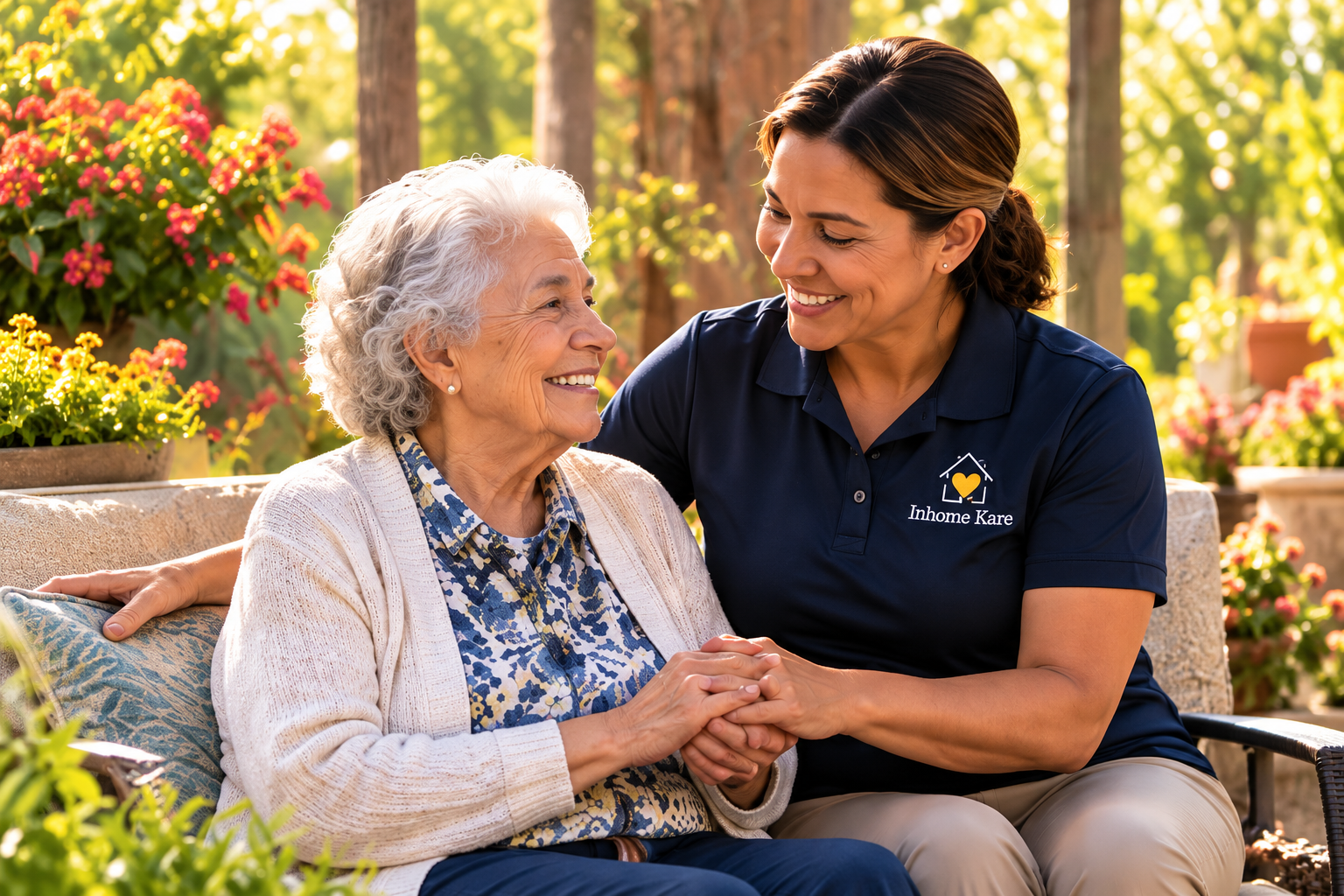
WHEN SOMETHING IS CHANGING
“My Mom Is Becoming Forgetful. I Don’t Know How Much Help She Needs.”
Families rarely wake up one morning with a complete care plan. Instead, they begin noticing things.
- “Mom asks me the same question several times.”
- “Dad forgot whether he had eaten.”
- “She doesn’t seem comfortable when unfamiliar people come over.”
- “He stopped doing things he used to enjoy.”
- “Mom can still live at home, but I don’t feel comfortable leaving her alone as long.”
- “Dad gets confused about his normal routine.”
Memory changes can affect people differently. The appropriate level of support depends on the individual — not simply the word dementia.
THE INHOME KARE APPROACH
When Memory Changes, Familiarity Becomes Part of Care.
In-home care allows support to take place within the environment the person already knows. When caregiver consistency is possible, another kind of familiarity can develop: the person walking through the door.
EVERYDAY MEMORY SUPPORT
Dementia Care at Home Can Include More Than Companionship.
Companionship
Conversation and familiar social interaction.
Daily Routines
Supporting established routines.
Meal Preparation
Preparing meals and companionship during mealtimes.
Personal Care
Assistance with dressing, grooming, bathing and more.
Activities
Puzzles, music, gardening, walking and familiar interests.
Routine Reminders
Gentle reminders related to daily activities.
Mobility Support
Assistance moving through the home and activities.
Light Housekeeping
Help maintaining familiar areas.
Family Respite
Allowing family caregivers time away.

The Smallest Routines Can Become Important.
Our goal is to learn those routines and support them where appropriate rather than unnecessarily changing everything.

Familiar Activities Can Still Be Part of the Day.
Dementia support does not have to mean sitting in front of a television all afternoon. The person is what matters most.

Respectful, Personalized Personal Care.
Care should always be respectful, patient, and individualized.

Dementia Care for Tucson Families
Inhome Kare provides non-medical dementia and memory support in Tucson and surrounding communities, including Catalina Foothills, Oro Valley, Marana and Tanque Verde.
How Care Begins
Frequently Asked Questions
Can someone with dementia continue living at home?
Yes. Many people with dementia can continue living safely at home with appropriate support. Care can be adjusted as routines, abilities, and needs change over time.
Can a caregiver stay with my mother who has dementia while I leave the house?
Yes. A caregiver can provide companionship and supervision while family members run errands, attend appointments, work, or take a needed break.
Can a dementia caregiver prepare meals?
Yes. Caregivers can help prepare meals, provide mealtime companionship, and support familiar eating routines based on the individual’s preferences and care plan.
Can caregivers help with bathing and dressing?
Yes. Personal care can include assistance with bathing, dressing, grooming, toileting, and other daily activities while respecting the person’s privacy, dignity, and independence.
Is dementia care the same as Alzheimer’s care?
Not exactly. Alzheimer’s disease is one cause of dementia. Home care can support people living with Alzheimer’s as well as other forms of dementia, with care tailored to the individual’s needs and routines.
When is home care no longer enough?
Needs vary from person to person. If someone requires ongoing medical treatment, continuous skilled nursing, or a level of supervision that cannot be safely provided at home, the family should discuss additional care options with the person’s healthcare professional.